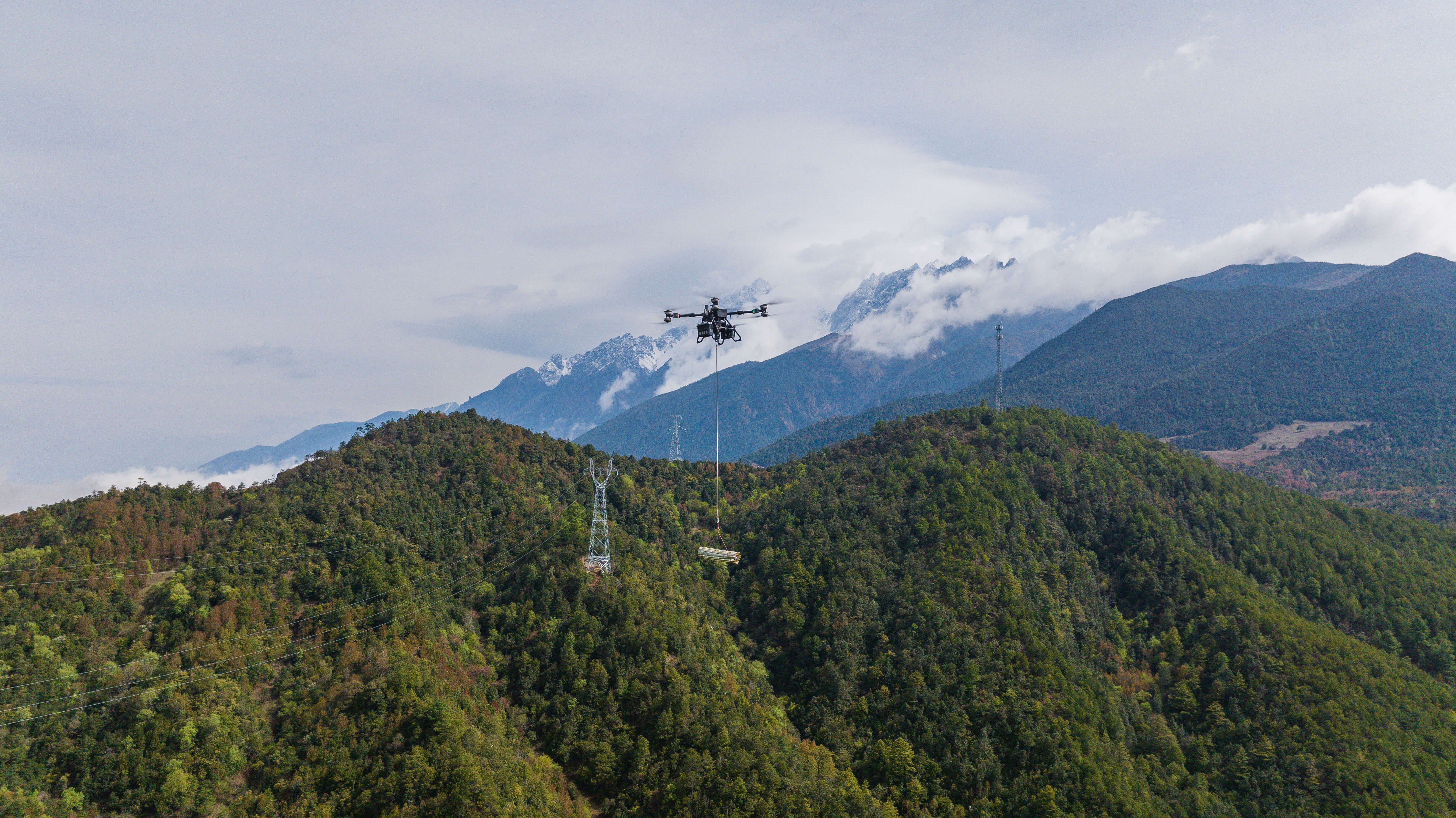
DJI flagship transport drone DJI FC100 released: the ultimate low-altitude delivery machine
June 30, 2025, DJI officially released the new flagship civilian cargo drone DJI FlyCart 100 (hereinafter referred to as DJI FC100), integrating greater payload, faster charging, and enhanced safety and intelligence. It supports two payload systems, is compatible with a rich ecosystem of applications, supports PSDK, and can adapt to third-party payloads, redefining professional cargo transport and breaking through more scenario boundaries.DJI FC100 is suitable for emergency response, firefighting, power, engineering, logistics, water operations, and many other scenarios, handling all-weather transport in complex environments with ease, setting a new benchmark for low‑altitude transport in the drone industry.
Zhang Xiaonan, Senior Director of Corporate Strategy and Spokesperson at DJI, said: “DJI has always responded to industry expectations with technological innovation. Over the past two years, cargo drones have played a key role in emergency rescue, high‑altitude power, and engineering transport, earning recognition from professional users. In the new generation cargo drone DJI FC100 we have focused on optimising payload, endurance, and the intelligent safety system, while introducing a more flexible aerial delivery solution, so that more users can enjoy the comprehensive improvement in transport efficiency, safety, and adaptability brought by professional lifting and services. We look forward to exploring new low‑altitude cargo scenarios together with more users!”
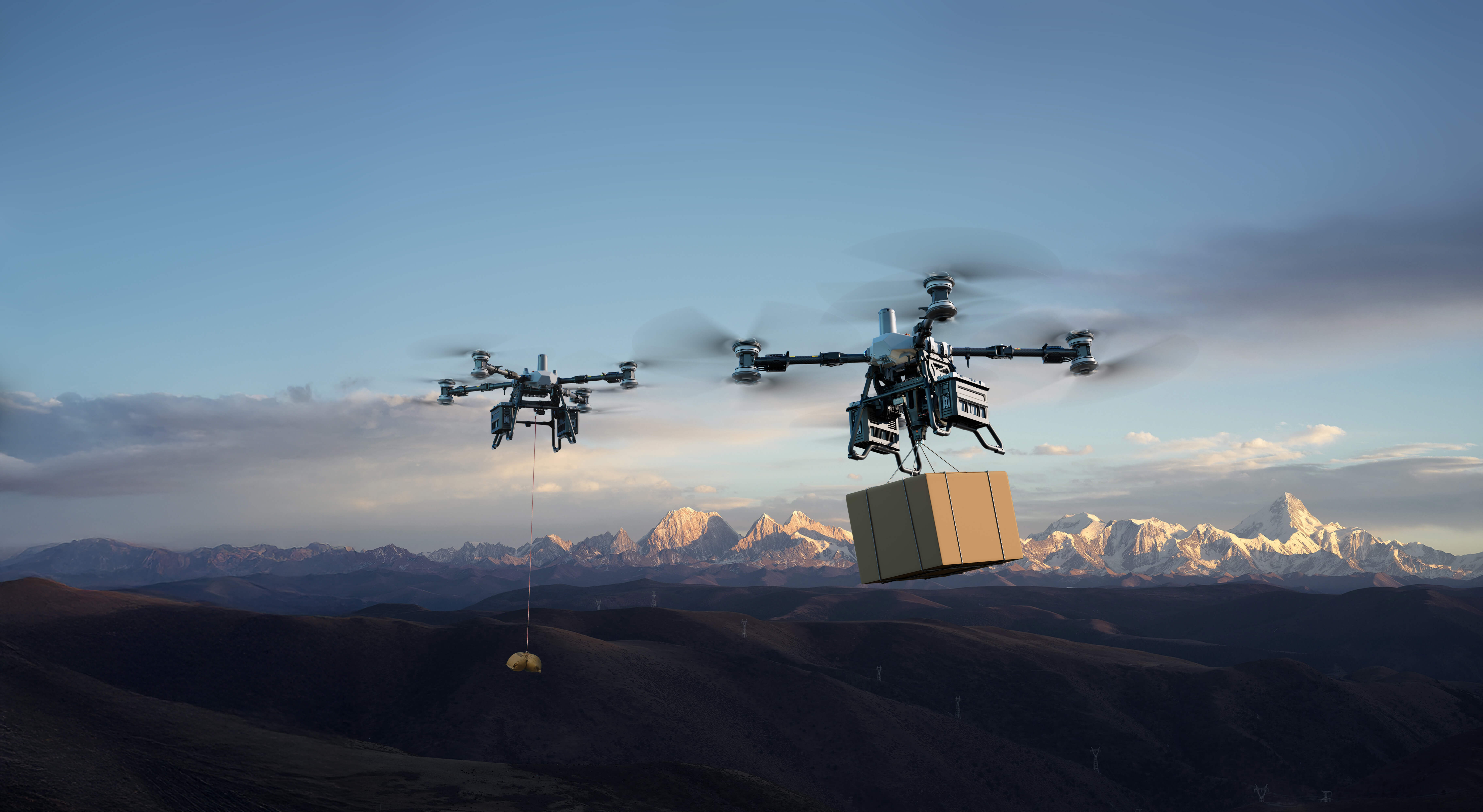
80kg max payload, 9‑minute fast charging, unlimited possibilities across mountains and seas
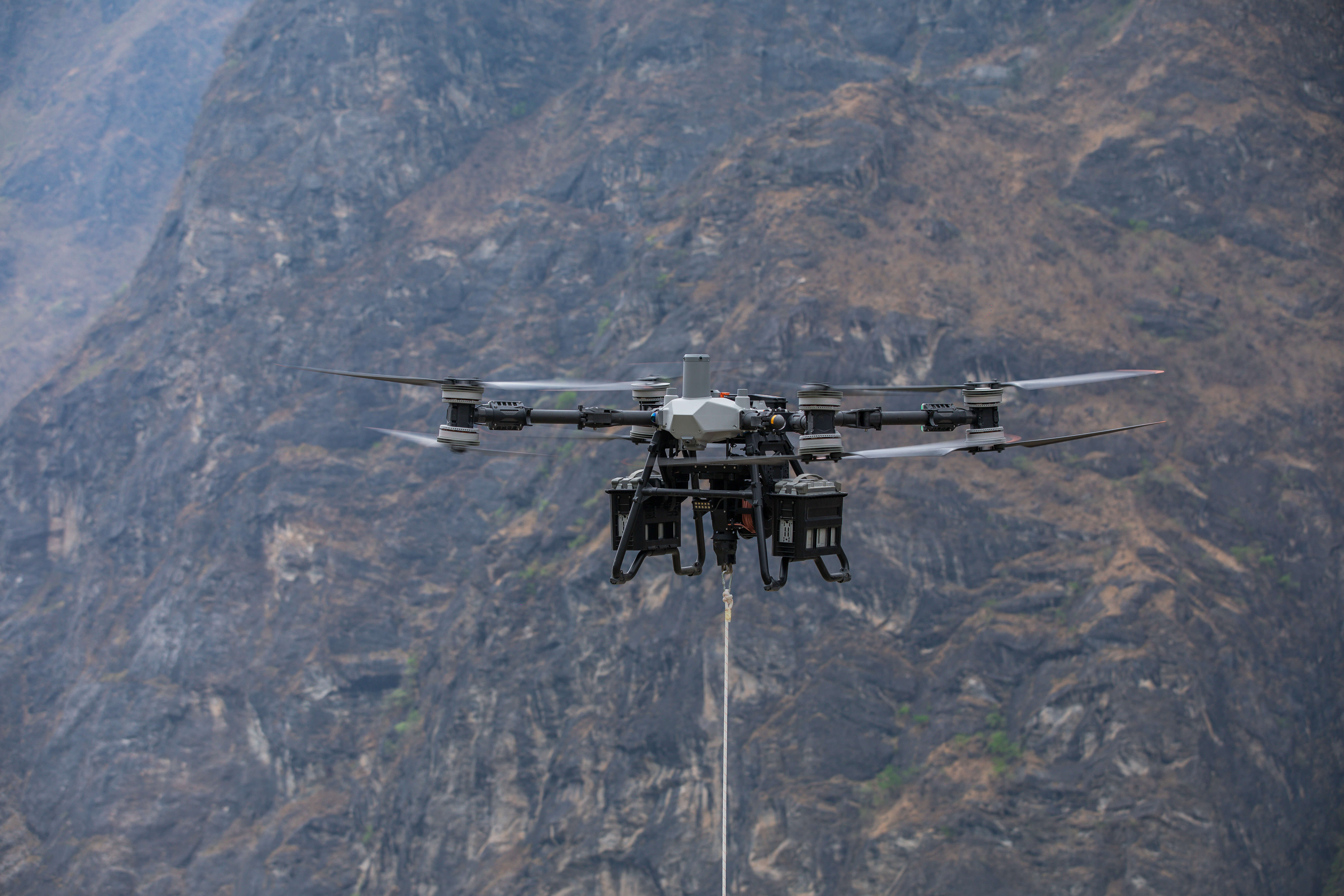
Cargo drones are typically used in complex environments such as plateaus, mountains, and waters. To improve equipment reliability and durability,DJI FC100 features enhanced protection design. The whole system has an IP55 ingress protection rating1, resistant to water and dust; it can operate in ambient temperatures from -20°C to 40°C2, withstands winds up to 12 m/s3, and has a maximum flight altitude of 6000 m4, meeting transport needs at different altitudes. Compared to the previous generation,DJI FC100 still adopts a 4‑axis 8‑rotor multi‑rotor configuration, but the airfoil has been optimised, the propeller diameter increased, and the motors upgraded, significantly improving efficiency and power. When unloaded, it achieves a maximum range of 26 km5.The 62‑inch carbon‑fibre propellers are stiffer, lighter, and less prone to deformation at high temperatures, with a maximum single‑axis thrust of 82 kg. A blade lock clip is installed above the motor to reduce blade vibration and ensure smoother flight.
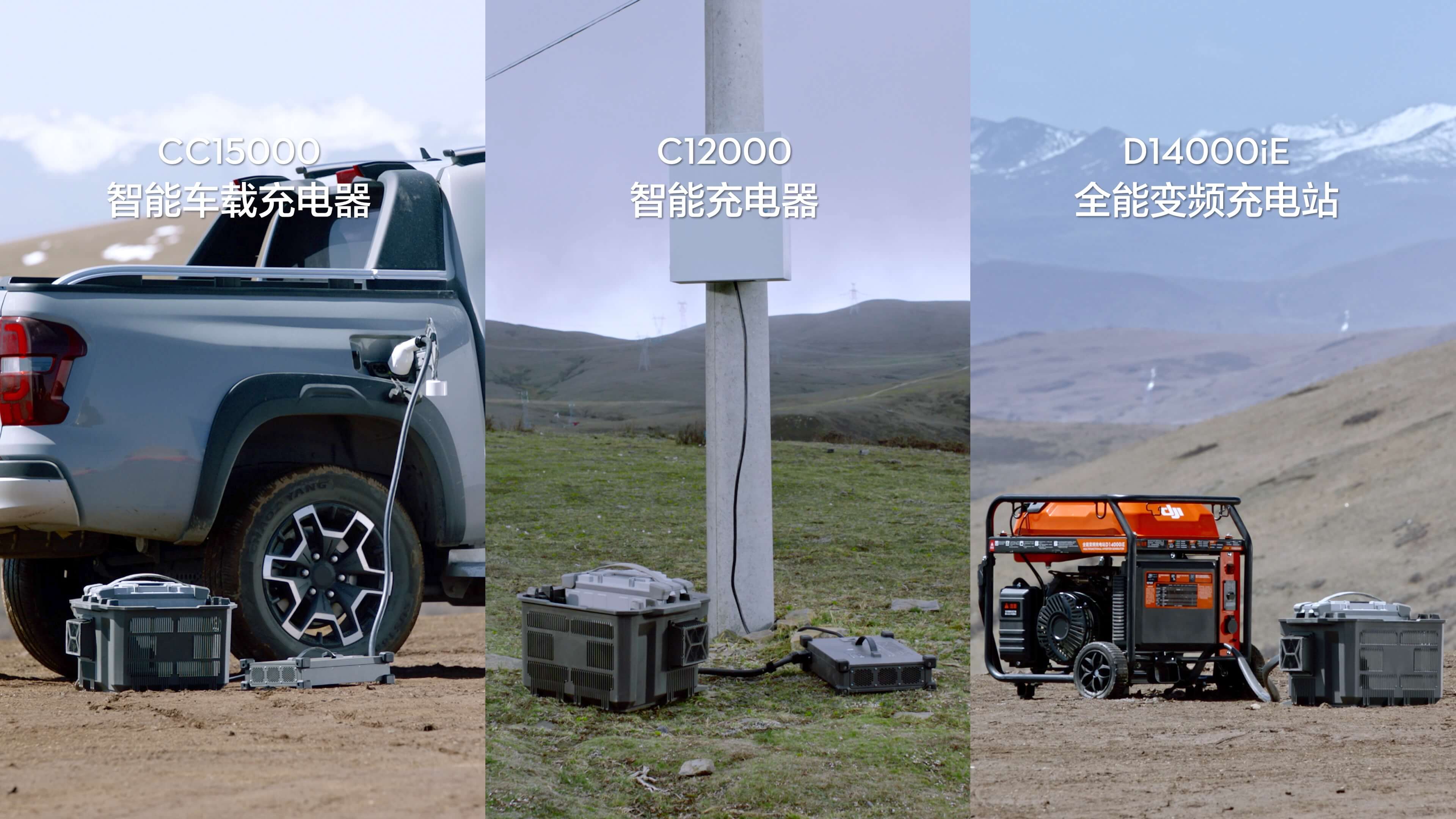
DJI FC100 supports single‑battery and dual‑battery modes.In single‑battery mode, the maximum payload is 80 kg, double that of the previous generation, with a maximum flight distance of 6 km6. In dual‑battery mode, the maximum payload is 65 kg, with a maximum flight distance of 12 km7.A single battery has a large capacity of 41 Ah, supports 1500 warranty cycles8, and enables 9‑minute9ultra‑fast charging. In low‑temperature environments, the battery can be preheated10, ensuring stable performance in frigid regions. The battery is also compatible with multiple charging devices, meeting recharging needs in daily, outdoor, and in‑vehicle scenarios.DJI FC100 leverages a reliable energy system, combined with dual‑battery hot‑swap and battery redundancy, to enable uninterrupted operations.
Two payload systems, rapid response, flexible adaptation to multiple scenarios
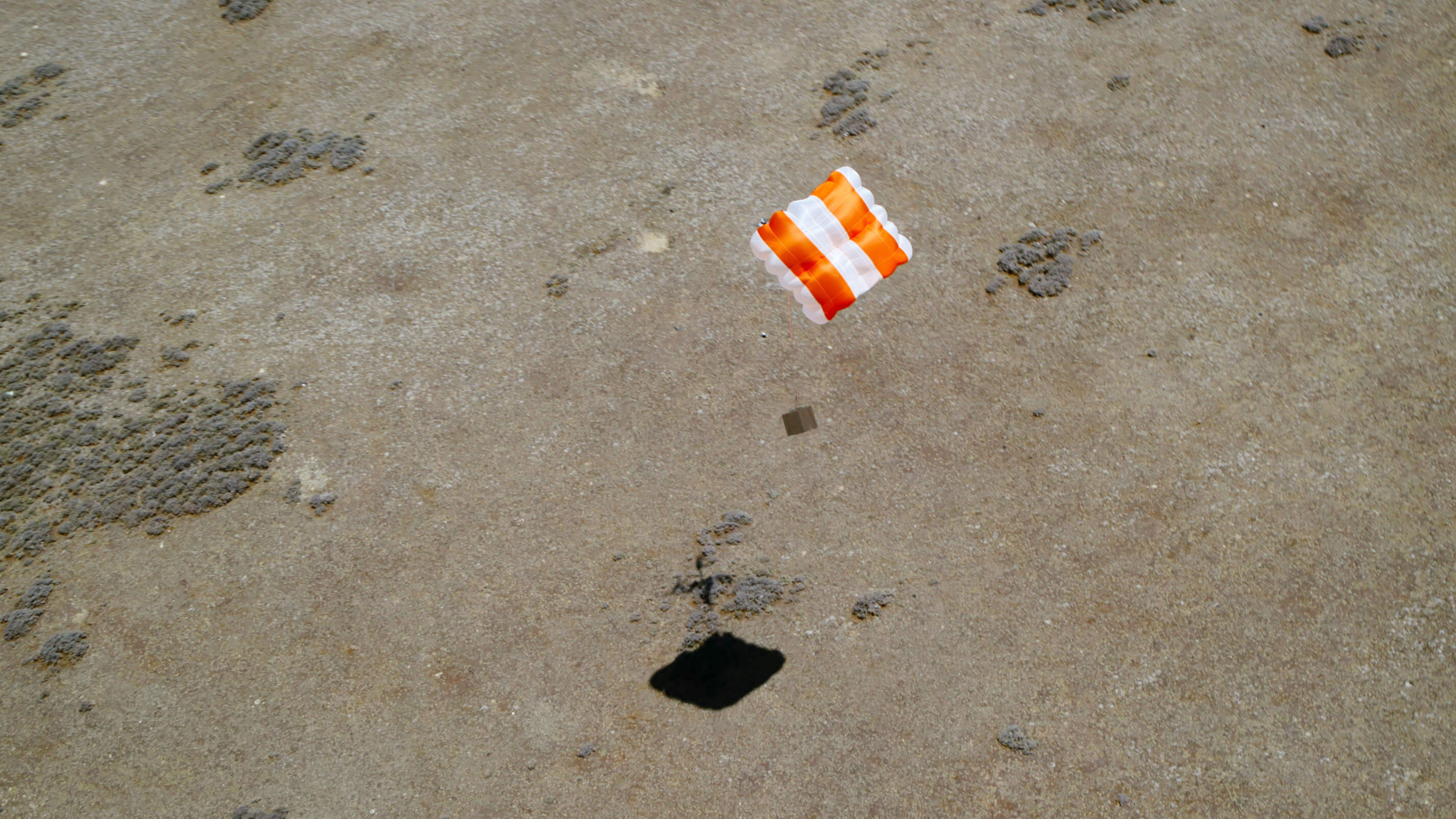
Compared with the previous generation,DJI FC100 retains practical features such as real‑time weighing and automatic sway suppression, while the payload system has been thoroughly revamped. It is available in two versions: the new Flagship Aerial Delivery System and the Dual‑Battery Lifting System. The flagship version meets diverse user needs with greater automation and intelligence, featuring an electrically operated release hook11, efficient loading/unloading, and supports manual and automatic winding/unwinding of a 30‑meter rope. The dual‑battery version offers a streamlined solution with a fixed 10‑meterrope, giving users more flexible options.
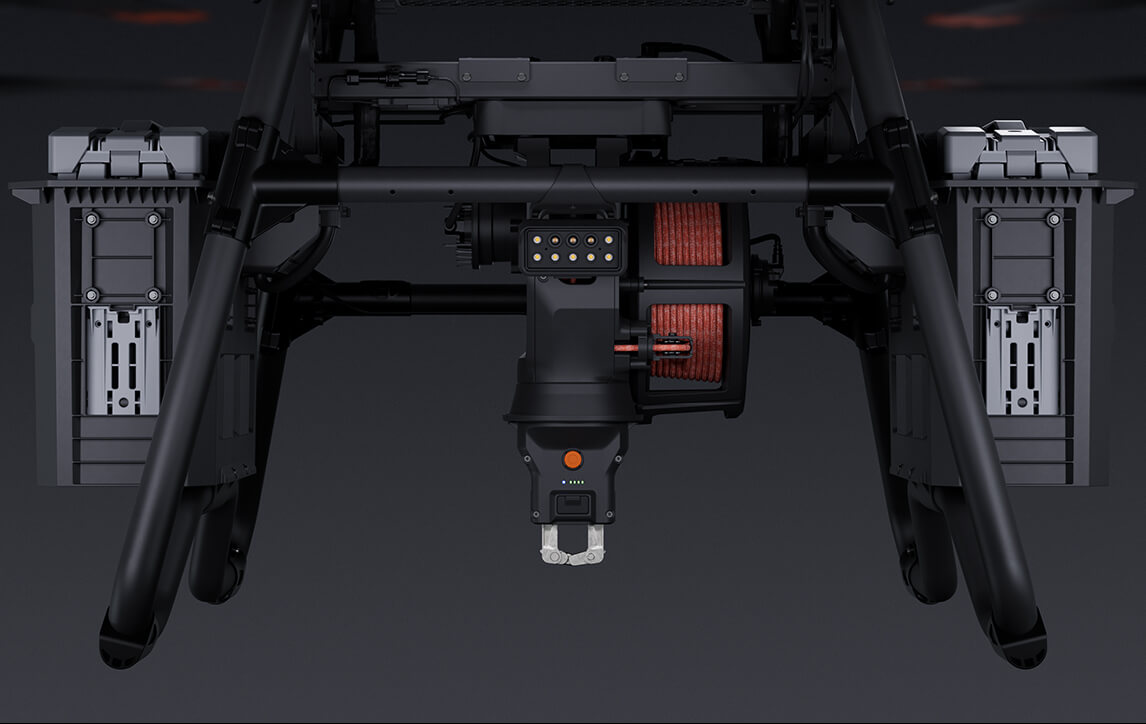
The Flagship Aerial Delivery System consists of a split‑type dual‑battery landing gear, a dual‑motor winch, and an electrically operated active hook. The split‑type dual‑battery landing gear supports quick installation/removal and flexible switching between single and dual batteries. The winch adopts a new dual‑motor retraction mechanism for smooth rope control; it is equipped with a 30‑meterrope and can achieve high‑speed winding/unwinding at 1.2 m/s even under heavy loads. The load automatically decelerates when approaching the ground, and the hook can be remotely released, ensuring efficient and safe delivery. In case of accidental entanglement, the rope can be released with one press without the need for fusing, allowing the drone to escape and ensure safety. The flagship aerial delivery system supports wireless charging12for convenience, and also features audible and visual alerts for night operations, making unloading safer.
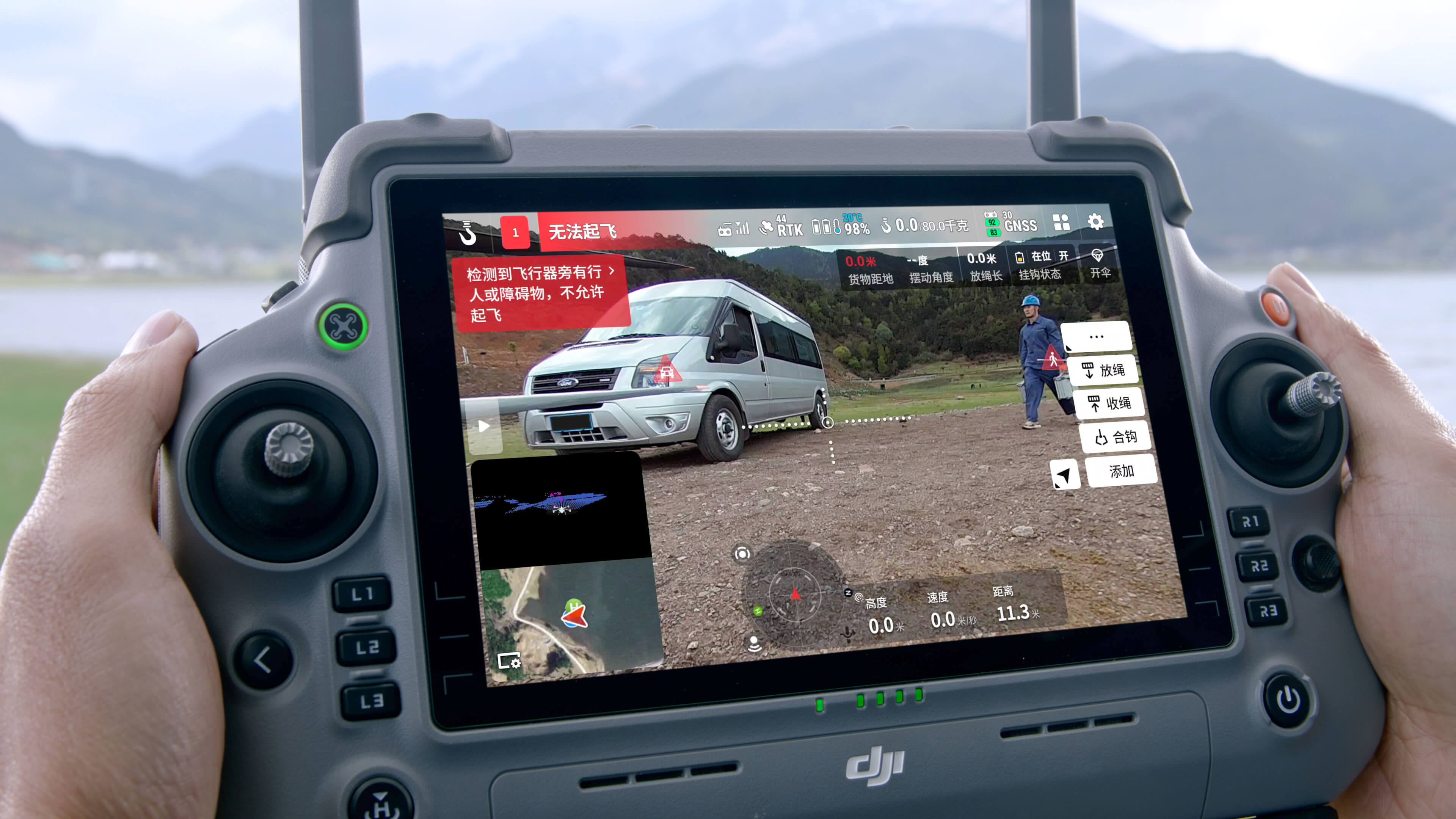
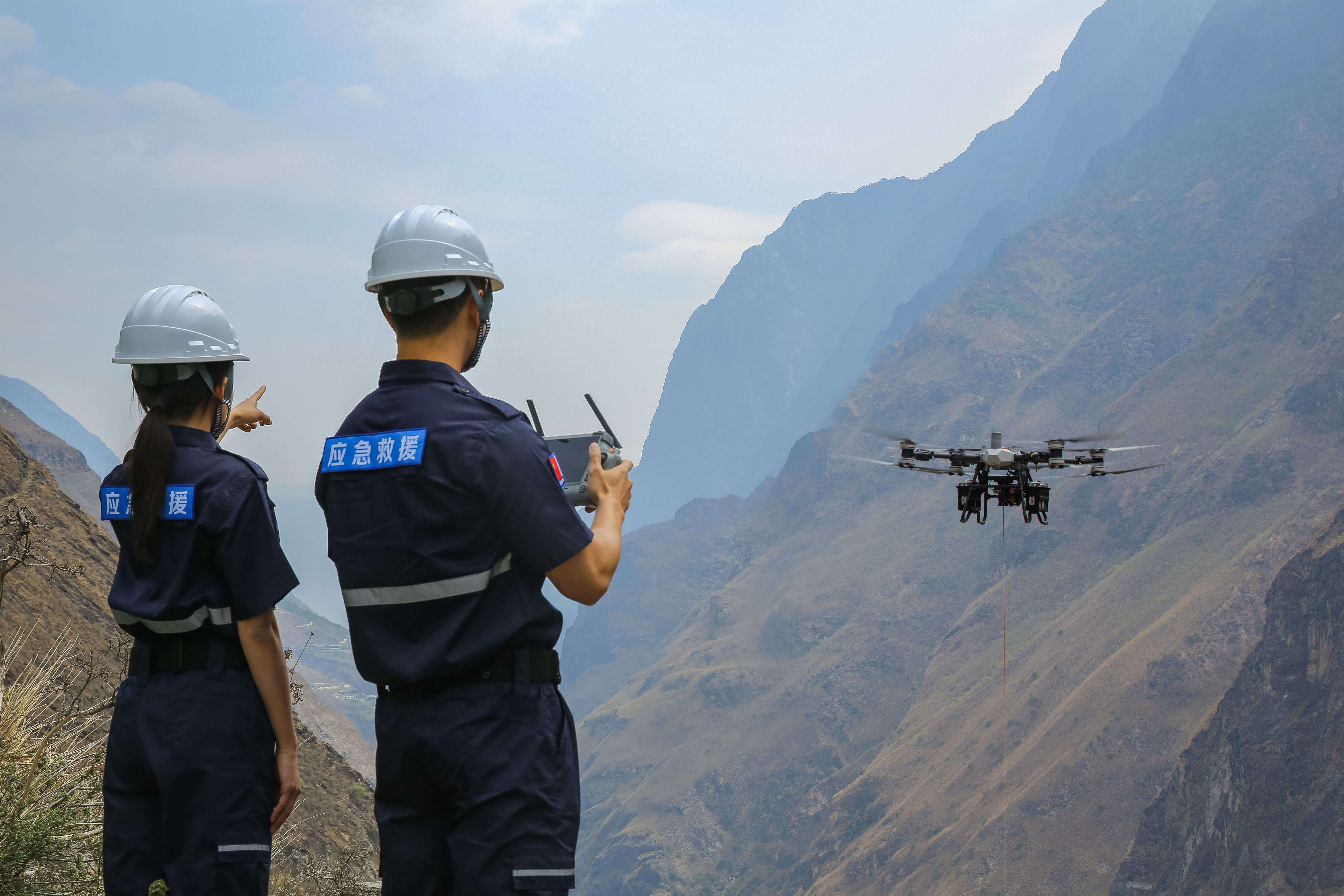
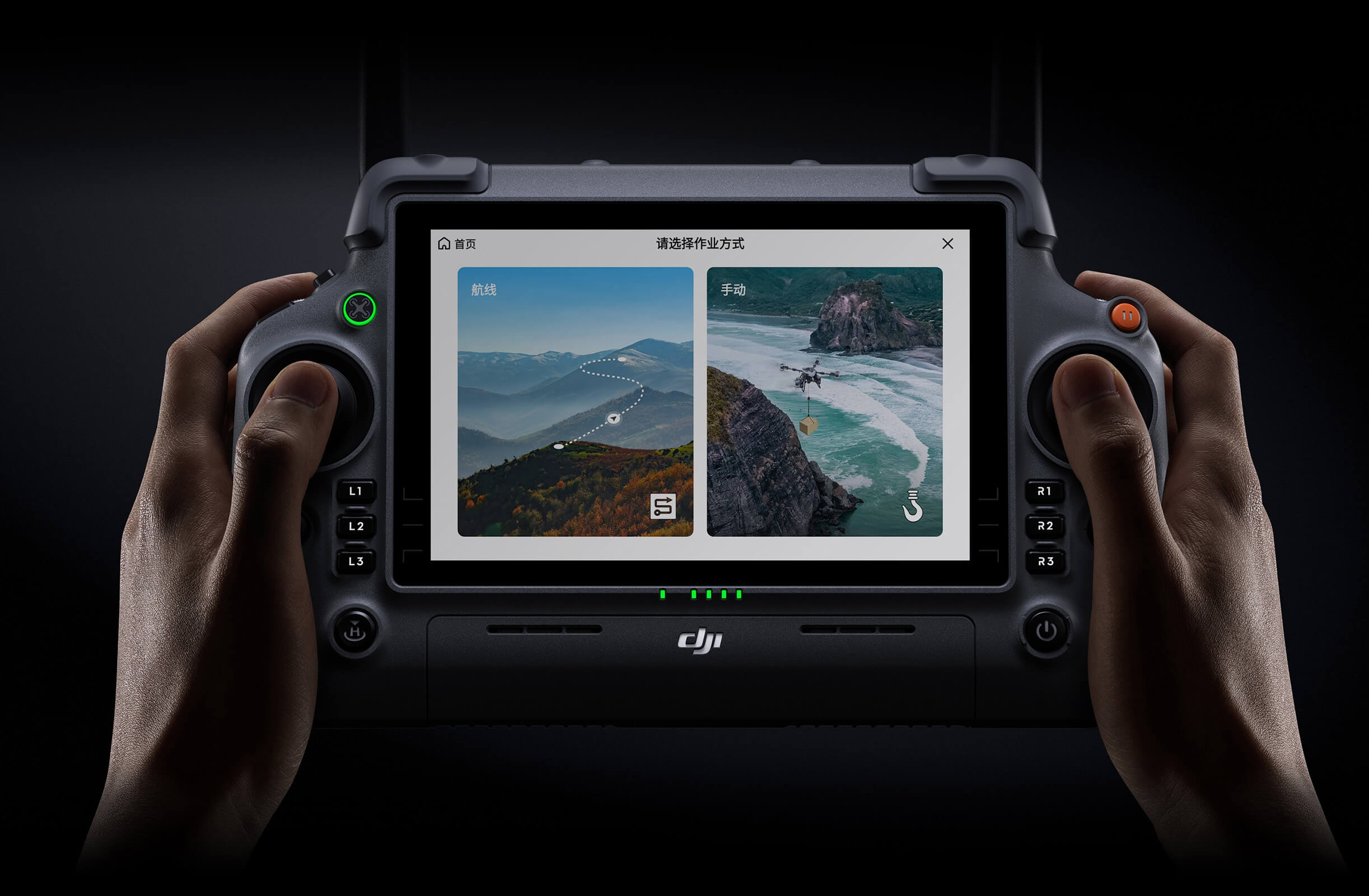
DJI FC100 remote controller DJI RC Plus 2 has an IP54 protection rating,water‑ and dust‑resistant, and can operate at temperatures from -20°C to 50°C.It features a 7‑inch high‑brightness large screen that remains readable under strong light; it supports a dual‑controller mode16, accommodating collaborative operations,truly a reliable partner for the aircraft.
The aircraft features the newly upgraded 20‑km O4 video transmission system17, providing more stable signals and smoother video feeds. It can also be equipped with the DJI 4G enhanced video transmission moduleas a signal supplement. When mobile network coverage is good, it automatically switches to cellular transmission, handling complex scenarios such as mountain obstructions with ease. If thesignal is interfered with and there is no mobile network, the D‑RTK3 multi‑function base station18's relay function can ensure smooth operations.
Powerful and user‑friendly software platform, open ecosystem and accessories, worry‑free for users
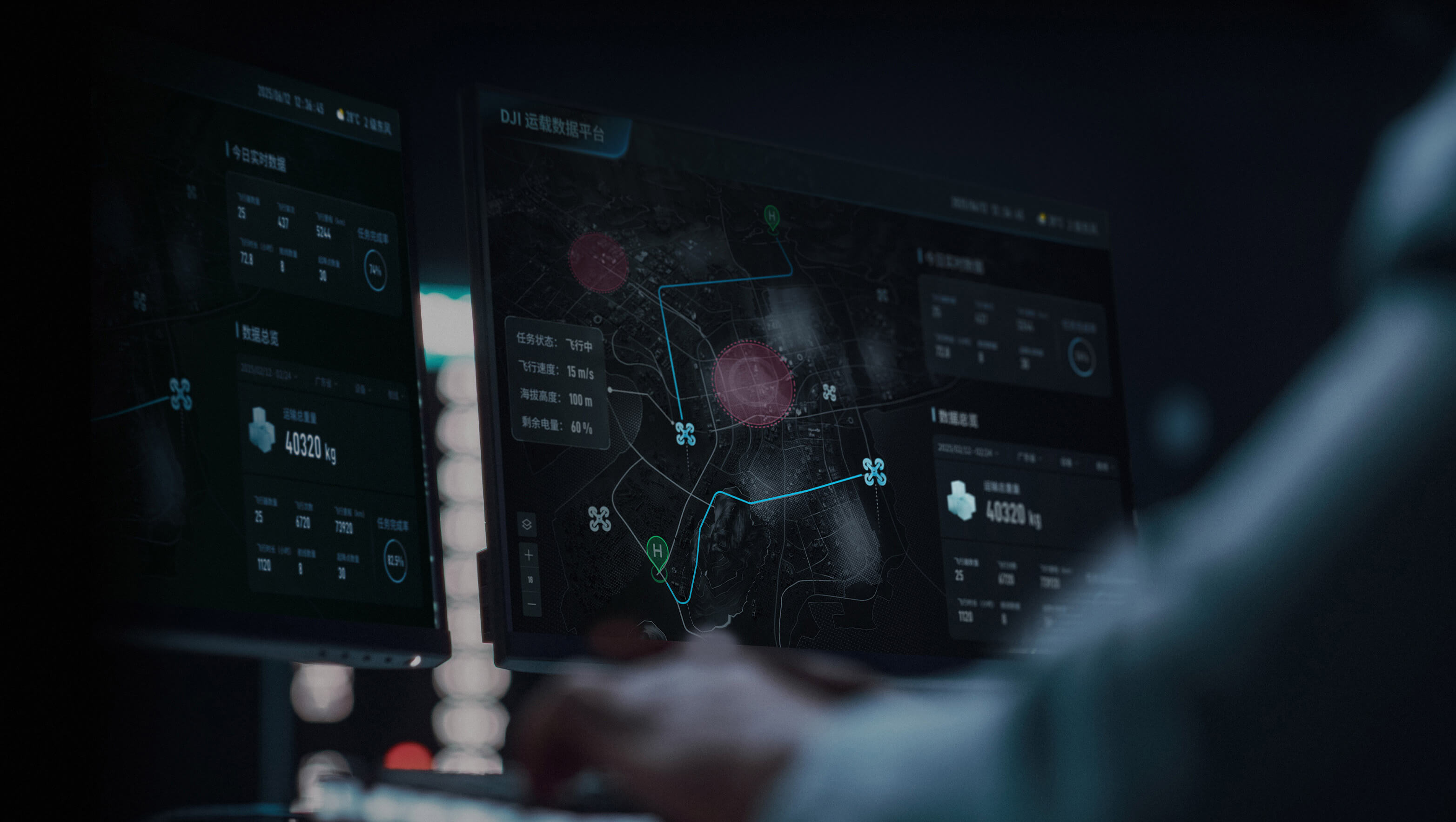
The new DJI Delivery App, purpose‑built for cargo transport, features a cleaner interface and more powerful functions. It clearly displays real‑time flight status and cargo delivery information, and adds new features such as loading/unloading point guidance andAR display, greatly improving operational efficiency. The one‑stop aerial transport cloud platform – DJI Siyun – is compatible with the entire FlyCart cargo drone series, enabling efficient planning of equipment tasks, comprehensive operational oversight, centralised team resource management, and multi‑dimensional data analysis. It combines professionalism with ease of use, facilitating efficient multi‑end collaboration and integrated cargo management. In addition,DJI FC100 opens up PSDK interfaces and high‑power ports, supporting external payloads19. It also supports the new Cloud‑to‑Cloud Connection 2.0, opening up more Siyun functions to meet a wider range of industry transport needs and possibilities.
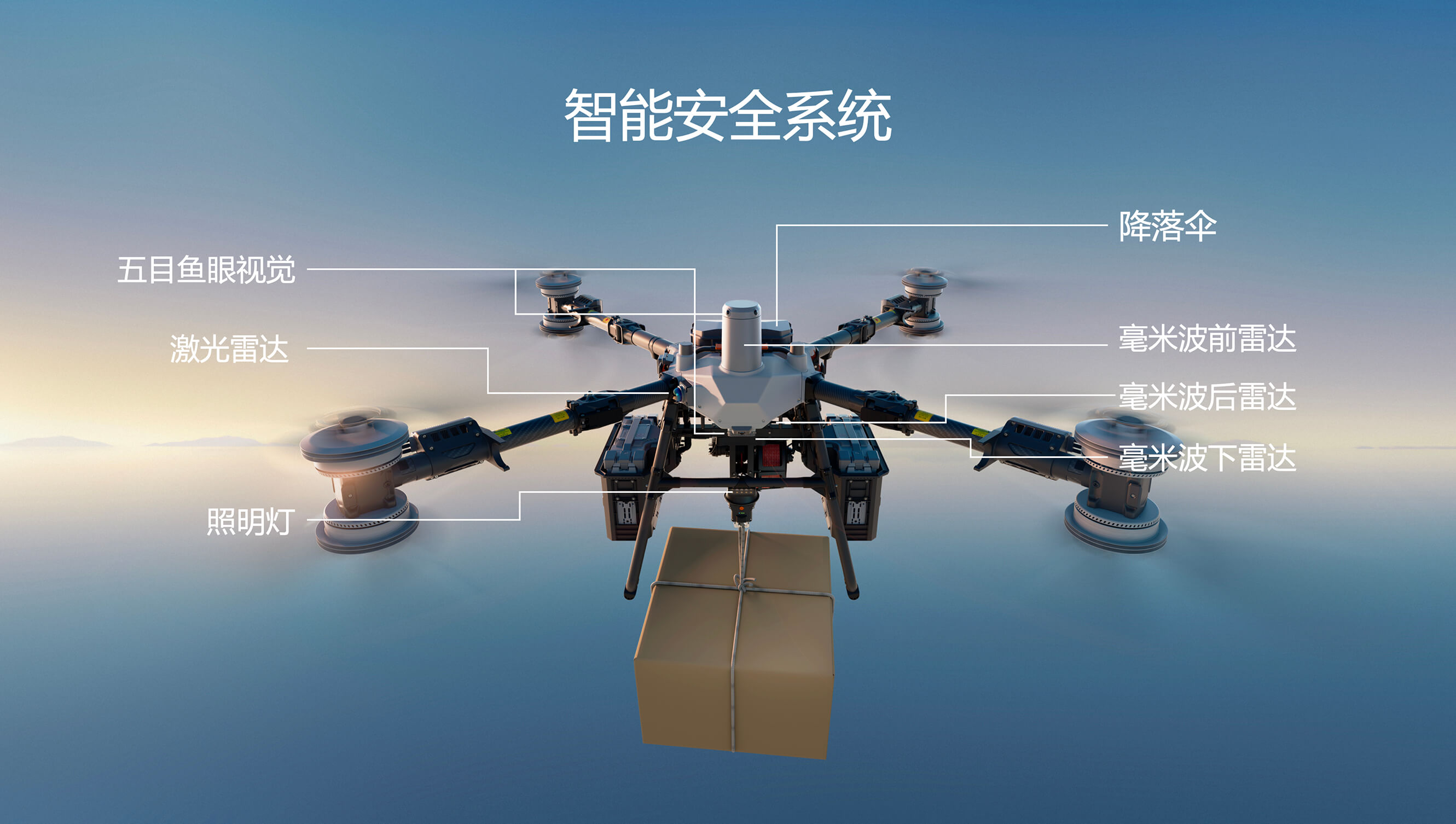
Today, DJI's new cargo drone, with its outstanding payload performance, industry‑leading stability, and intelligence, is redefining transport in various fields. In the power industry,DJI FC100 has expanded, on the basis of the previous generation, the types of transported materials from insulation terminals, spacers, etc., to large objects such as lightning arresters for aerial lifting, providing more efficient aerial transport solutions for the construction and maintenance of high‑voltage transmission lines in mountainous areas. In engineering construction,DJI FC100 has extended its transport capability from traditional cement and sand to small‑ and medium‑sized construction machinery, completing transport tasks over a dozen kilometres away from the mountains in a single trip, completely changing the inefficient manual‑carrying mode. In emergency rescue scenarios, when disasters cut off roads,DJI FC100 leverages its omnidirectional sensing system and flagship aerial delivery system to enable fully automatic unloading in complex environments, delivering relief supplies precisely to areas unreachable by personnel, buying precious time for disaster response while maximising the safety of rescue workers.
DJI FlyCart 100 marks another solid step forward for DJI in the professional cargo transport sector. In the future, we will continue to delve into industry needs, break through scenario boundaries with innovative technology, enable drone transport to create value in more fields, and inject new momentum into the development of the low‑altitude economy.